

Business Digitals
Empowering Your Digital Future, One Insight at a Time
Precision for Humanity: How Sigma-Delta Sensing Architecture can Revolutionize Robotics and Wellbeing
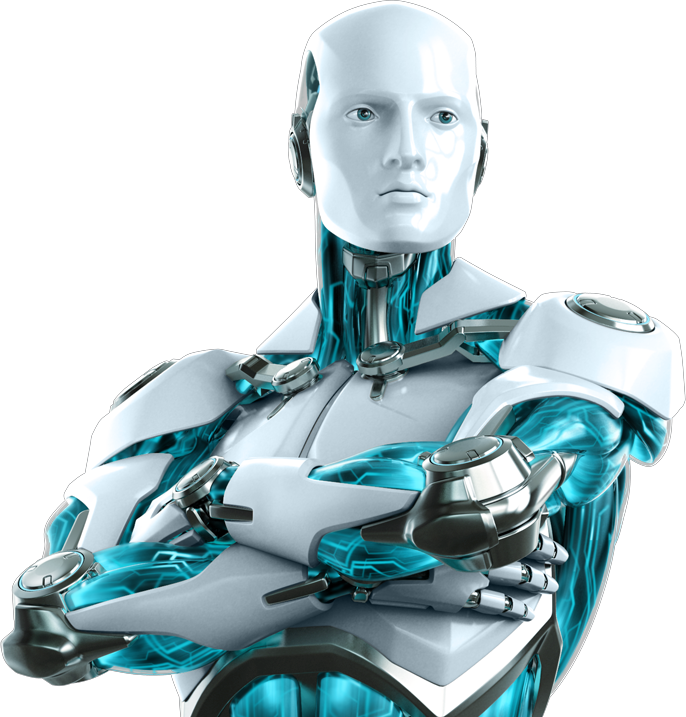
Giving Robots a Nervous System: How “Concurrent Sensing” can Humanize Machines
We tend to think of robots as tools of strength. They lift heavy chassis in automotive plants; they weld with blinding speed; they calculate faster than any mathematician.
But as robots move out of the factory and into our hospitals, nursing homes, and living rooms, strength is no longer the priority. Sensitivity is.
If a robot is going to assist a surgeon with a delicate procedure or help an elderly person out of bed, it doesn’t need to be stronger; it needs to be softer. It needs to feel.
For decades, the “sense of touch” in robotics has lagged behind vision and hearing. But a new breakthrough in signal processing – Concurrent Drive and Sense (CDS) architecture—is finally giving machines a high-fidelity nervous system. Here is how this shift from traditional sensing to current-mode architecture is redefining human wellbeing.
The Problem: Robots Have Been “Blinking”
To understand why robots have historically been clumsy, you have to look at their sensors.
Traditional sensors (using voltage-mode Sigma-Delta ADCs) operate on a “Stop-and-Go” basis. They send out a pulse (drive) and then wait to listen for a response (sense). It’s a time-share system.
This creates two massive problems:
- Blind Spots: While the sensor is driving, it isn’t sensing. The robot is effectively “blinking” hundreds of times a second.
- Lag: To make sense of the noisy data, the robot has to average multiple “blinks” together. This creates latency. By the time the robot “feels” that it has bumped into your arm, it might already be pushing too hard.
The Fix: The “Continuous Hum” of SigmaSense Technology
The new frontier, pioneered by architectures like SigmaSense, flips the script. It moves away from measuring voltage and instead measures current.
This is called Concurrent Drive and Sense (CDS).
Instead of “pulse-wait-pulse,” the system sends a continuous signal and simultaneously measures the current required to maintain it. It never stops listening. It operates in the frequency domain rather than the time domain.
Imagine the difference between checking a pot of water by dipping your finger in every 10 seconds (Traditional) versus keeping your hand submerged constantly (Concurrent). The latter gives you instant, unbroken awareness.
Why This Matters for Human Wellbeing
This might sound like obscure electrical engineering, but the real-world impact on human life is profound. Here are three ways this technology is changing the game:
The Rise of “Soft Robotics”
We don’t want to hug metal skeletons. We want robots that feel organic. However, traditional sensors struggle to work through soft materials like silicone or rubber (which have high electrical impedance).
Because CDS technology reads current and can penetrate high-impedance materials, we can now turn a robot’s entire soft, silicone shell into a sensor.
- The Impact: Prosthetic limbs that feel soft to the touch but can detect the texture of a grape without crushing it.
Immunity to the “Noise” of Healthcare
Hospitals are electrical nightmares. MRI machines, electro-cautery tools, and monitoring equipment fill the air with electromagnetic interference (EMI). This noise confuses traditional voltage-based sensors, making robots “jittery.”
Concurrent sensing operates on specific frequencies—like a radio tuning into a clean station. It can simply hop over the interference.
- The Impact: Surgical robots that offer steady, crystal-clear haptic feedback to the surgeon, ensuring that a tremor in the signal never becomes a slip of the scalpel.
True Collaborative Safety
Current “Cobots” (collaborative robots) are designed to stop if they hit you. But that’s still a collision.
With the extreme sensitivity of current-mode Sigma-Delta, robots can sense changes in the electromagnetic field before contact is made. They gain “proprioception”—a spatial awareness of where they are relative to you.
- The Impact: Industrial environments where humans and robots work shoulder-to-shoulder, with the machine slowing down instinctively as a human hand approaches.
The Future is Feeling
We are moving from the era of Automation to the era of Collaboration.
For a robot to be a true partner—whether it’s rehabilitating a stroke victim or assembling complex electronics—it cannot just follow code. It must perceive reality.
By adopting Concurrent Drive and Sense architectures, we aren’t just making chips faster; we are bridging the gap between the digital and the biological. We are building machines that don’t just work for us, but work with us, safely and sensitively.
About the author : Shawn Gray

Experienced corporate operations professional and visionary distinguished by extensive expertise in technology and business leadership, assuming the role of a dynamic catalyst for change with a remarkable history of achievements in propelling enterprises forward.


